
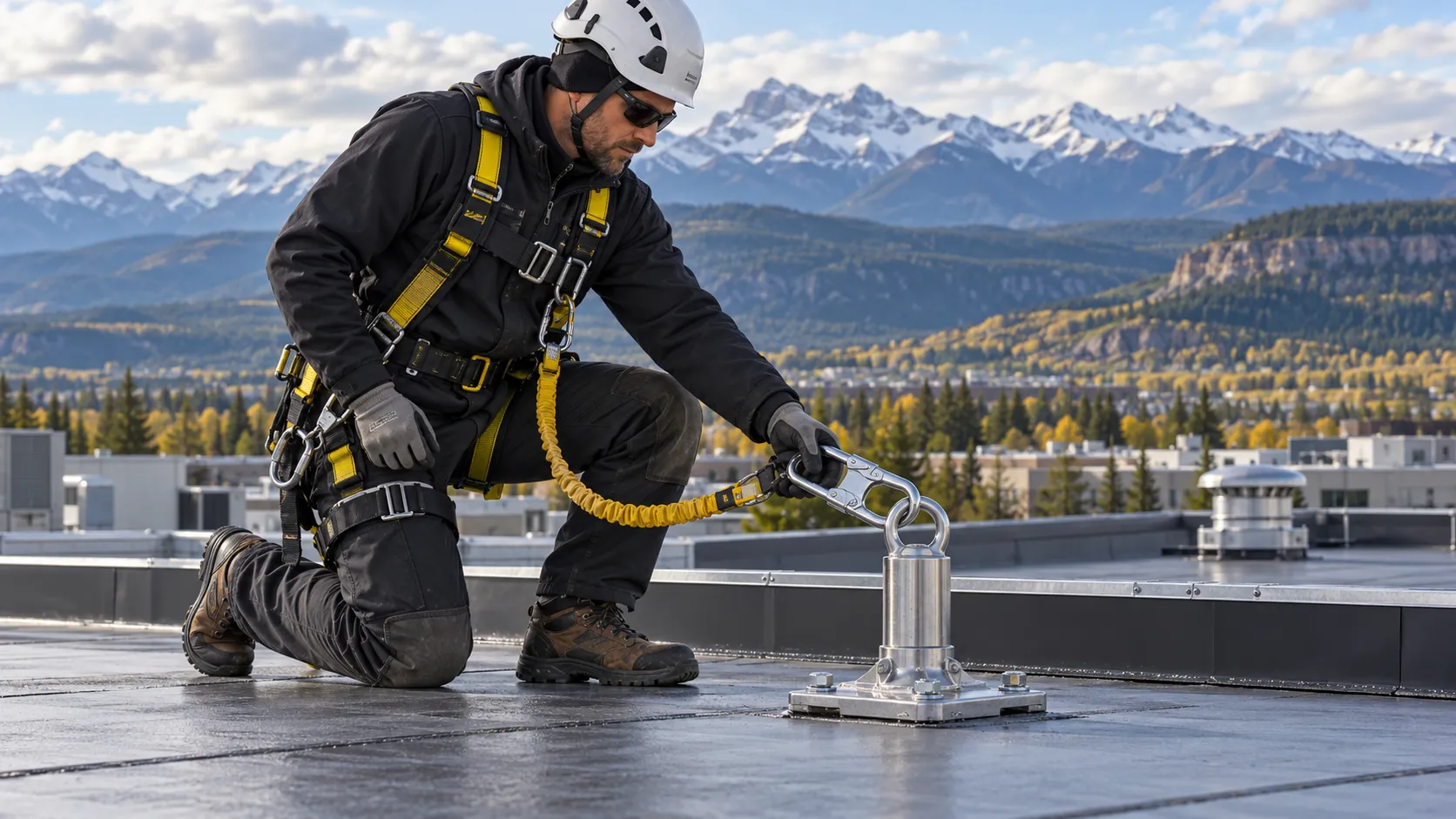
- Section 141 of the Alberta OHS Code requires the employer to train a worker in the safe use of the fall protection system before the worker enters an area where one must be used.
- Protection is required for a possible fall of 3 metres or more, and in several lower-height situations described below.
- The required training topics include Alberta legislation, fall hazards, anchors, connecting hardware, pre-use inspection, emergency response and practice in fitting and connecting equipment.
- The Code text we read does not set a renewal period for worker training. Course providers set their own certificate validity; the Safeworks Academy Alberta course states three years.
- An online course can cover the knowledge topics. The employer still has to make sure the practice and site-specific parts happen.
- When Alberta Requires Fall Protection at All
- What Alberta Fall Protection Training Must Include
- Where Online Training Fits, and Where It Stops
- Site-Specific Information and the Fall Protection Plan
- How Long Does Fall Protection Training Last in Alberta?
- Who Is Responsible for What
- Choosing a Fall Protection Course for Alberta Work
- Next Step
Fall protection training in Alberta is a legal duty that sits with the employer. Under section 141 of the Occupational Health and Safety Code, an employer must make sure a worker is trained in the safe use of the fall protection system before allowing that worker into an area where one has to be used [1]. The Code then lists what the training must include, and one item on that list is hands-on practice. That single item is why a certificate on its own does not settle whether a worker is properly trained.
When Alberta Requires Fall Protection at All
Training is only required for work where a fall protection system has to be used, so the first question is when that is. Section 139 of the Code says an employer and a supervisor must make sure a worker is protected from falling if the worker may fall [1]:
- a vertical distance of 3 metres or more at a temporary or permanent work area;
- a vertical distance of less than 3 metres where there is an unusual possibility of injury, which the Code defines as an injury that may be worse than landing on a solid, flat surface;
- into or onto a hazardous substance or object, or through an opening in a work surface; or
- more than 1.2 metres but less than 3 metres at a permanent work area.
The Code also sets the order of preference for how a worker is protected. An employer must install a guardrail. If a guardrail is not reasonably practicable, the worker must use a travel restraint system. If that is not reasonably practicable, the worker must use a personal fall arrest system, and if that is not reasonably practicable either, the employer must use equally effective controls [1]. A worker must use whichever fall protection system the section requires [1].
That order matters for training, because a worker is trained on the system actually used at the site, not on every system in the catalogue. The practical point is that "fall protection" is a family of systems, and the Code decides which one applies in which order. Our companion guide, fall arrest vs travel restraint, explains how the systems differ.
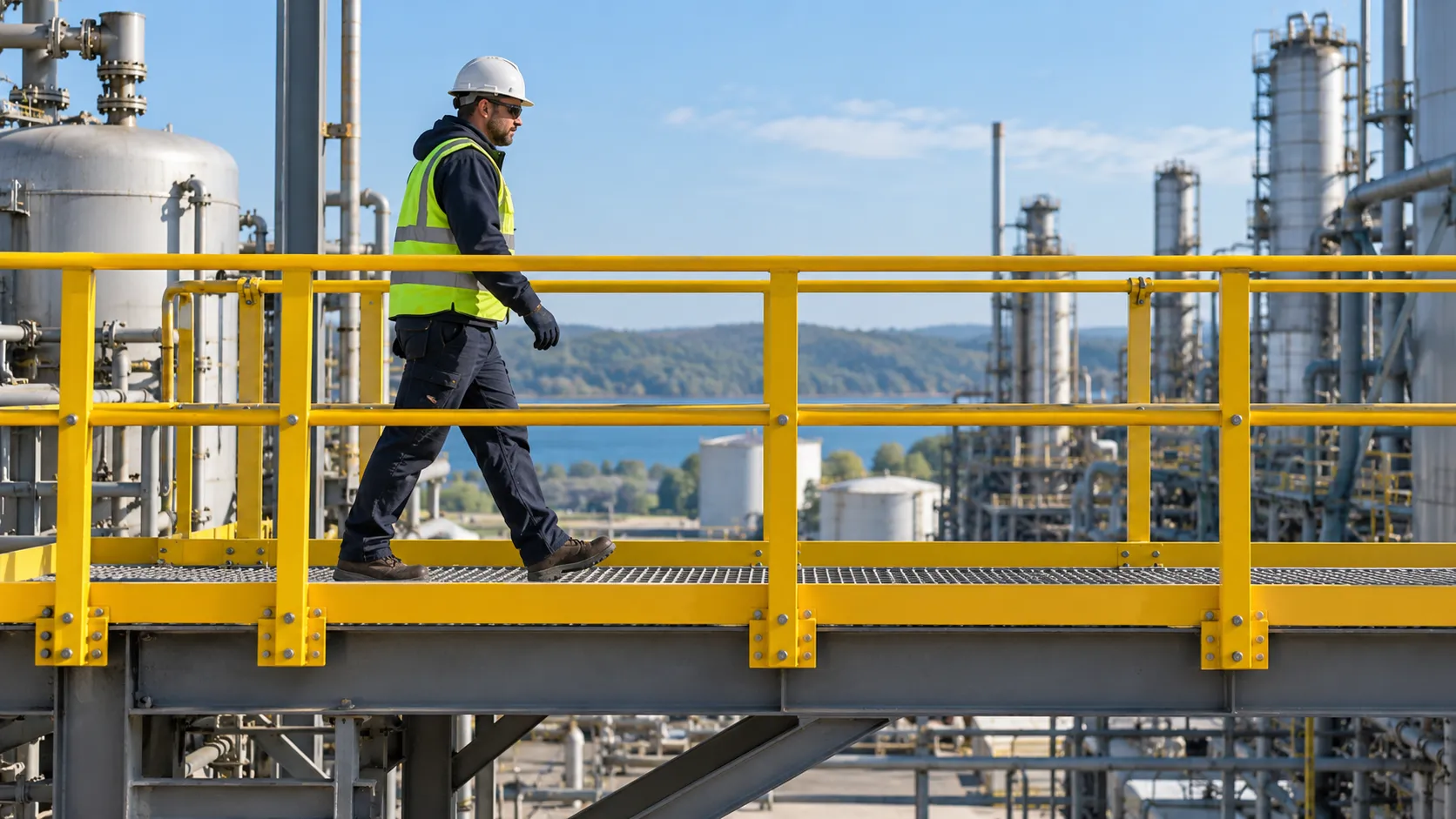
What Alberta Fall Protection Training Must Include
Section 141(2) lists the minimum content. The training must include [1]:
- a review of current Alberta legislation on fall protection;
- an understanding of what a fall protection plan is;
- the fall protection methods the worker is required to use at the work site;
- identification of fall hazards;
- assessment and selection of the specific anchors the worker may use;
- instructions for the correct use of connecting hardware;
- information about the effect of a fall on the human body, including maximum arresting force, the purpose of shock and energy absorbers, swing fall and free fall;
- pre-use inspection;
- emergency response procedures to be used at the work site, if necessary; and
- practice in inspecting, fitting, adjusting and connecting fall protection systems and components, and practice in emergency response procedures.
Section 141(3) adds a separate duty. On top of that list, the employer must make sure the worker is aware of the fall hazards particular to the work site and the steps being taken to eliminate or control them [1].
Read as a whole, items 1 to 9 are things a person can learn. Item 10 is something a person has to do. That distinction drives the next section.
Where Online Training Fits, and Where It Stops
Part 9 of the Code does not use the words online, classroom, instructor or certificate. The text we read for this guide sets out what the training must include, and it does not say how it must be delivered [1]. That means the practical question is not "is online allowed?" but "which of the required items does a given course actually deliver, and who covers the rest?"
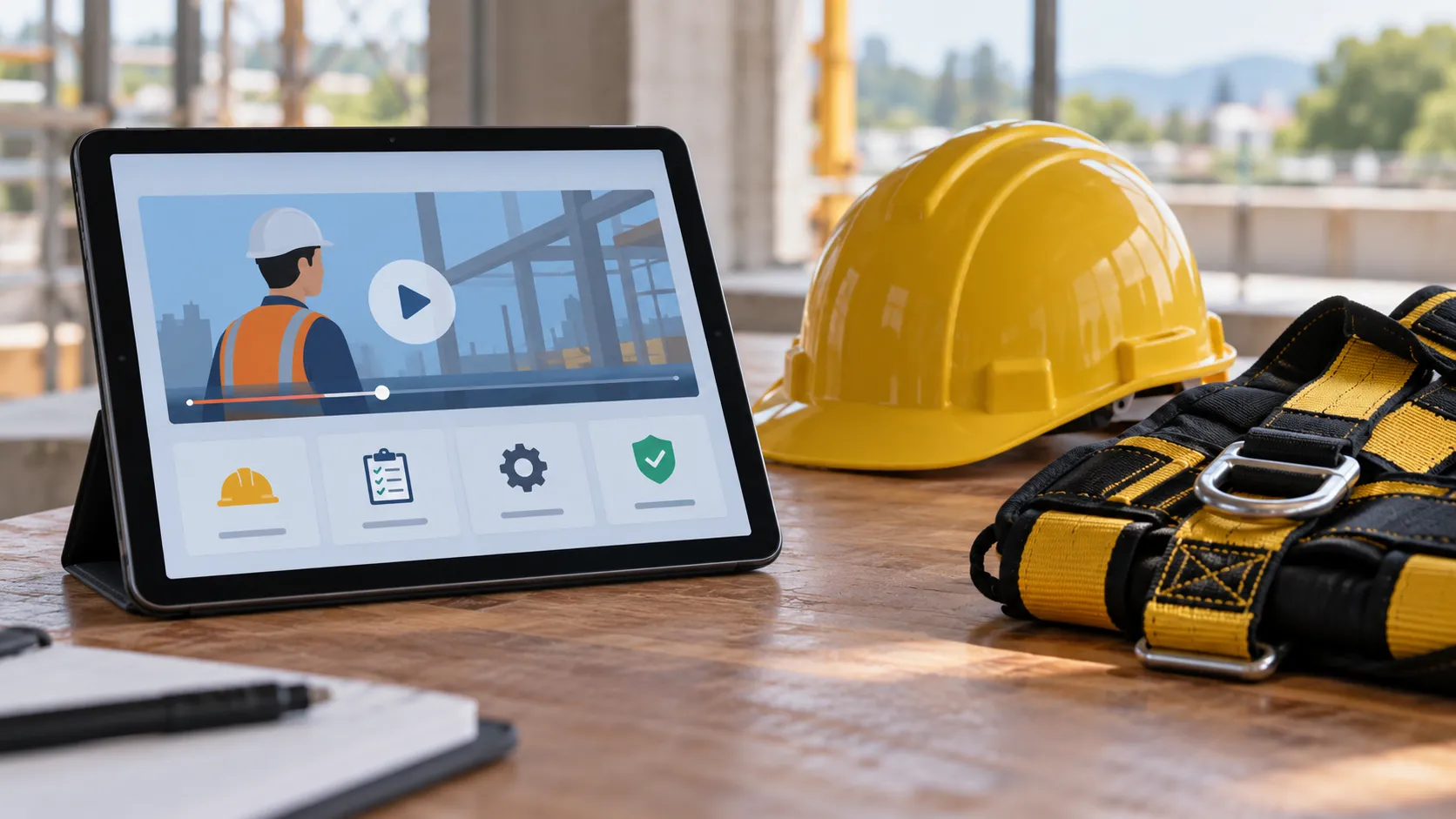
The Safeworks Academy course page for Fall Protection Alberta describes an online course of about four hours that covers travel restraint, fall arrest and fall restrict systems, hazard assessments, rescue planning, equipment inspections and Alberta's Occupational Health and Safety Act and Code. It also says the course provides practical evaluation tools and guides for supervisors to assess whether workers can properly inspect equipment and use fall protection systems [2]. In plain terms, the course carries the knowledge side, and the evaluation tools are there for the employer to check the hands-on side.
Our reading of how that fits together, which is an interpretation and not legal advice, looks like this:
- An online course is well suited to the legislation review, what a fall protection plan is, hazard identification, the effect of a fall on the body, and the principles of anchor selection and inspection.
- The employer still has to cover fitting and adjusting the harness the worker will actually wear, connecting to the anchors that will actually be used, and rehearsing the site's emergency response, because item 10 calls for practice in those things.
- The employer also has to add the site-specific information in section 141(3) that no general course can know in advance.
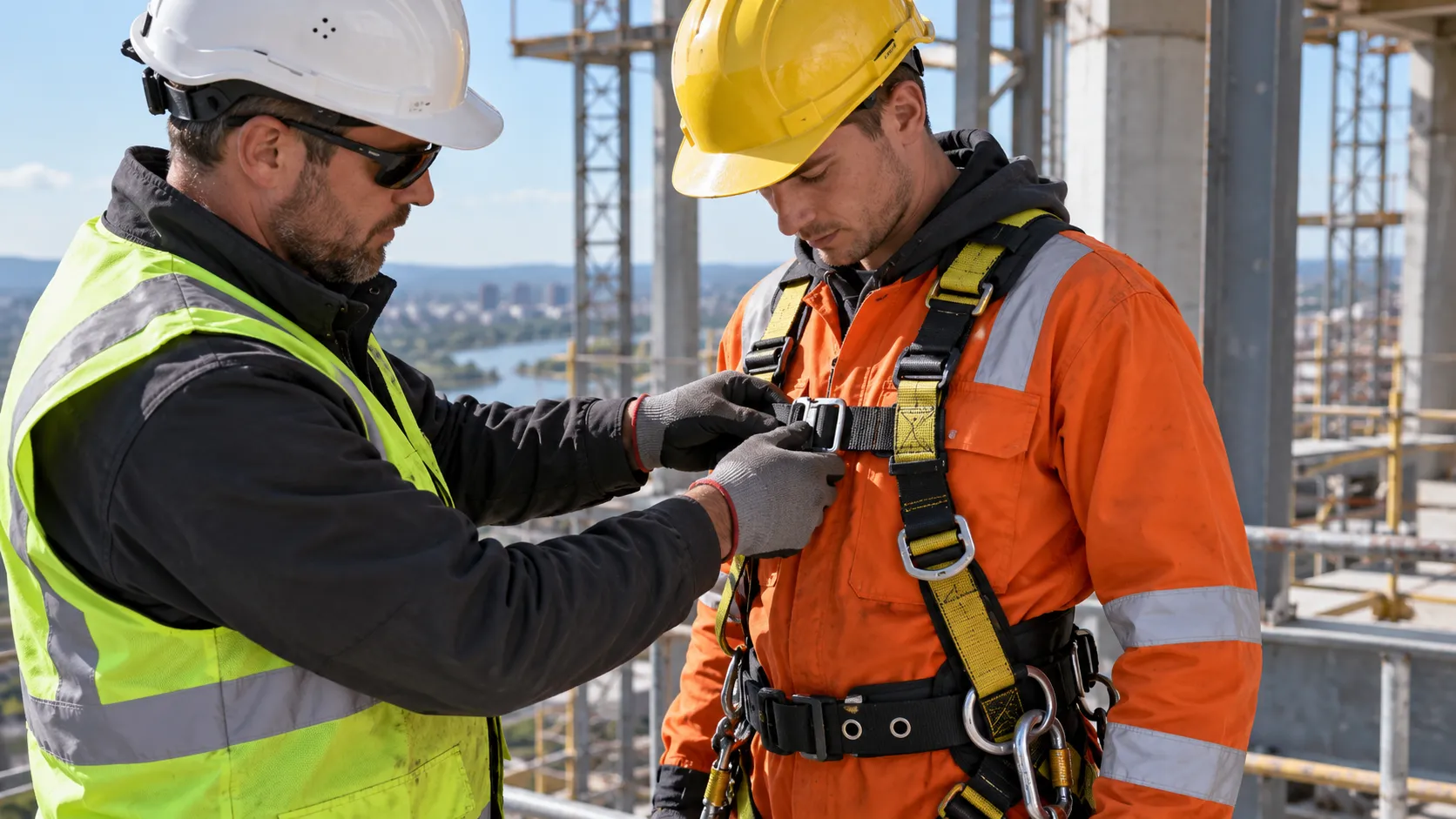
Site-Specific Information and the Fall Protection Plan
Training connects directly to the fall protection plan. Section 140 requires an employer to develop a fall protection plan for a work site if a worker may fall 3 metres or more and is not protected by guardrails. The plan must be available at the work site and reviewed with workers before work with a risk of falling begins, and it must be updated when conditions affecting fall protection change [1].
Training item 2 is "an understanding of what a fall protection plan is," so a worker who has completed a general course should be able to read a plan. Reading it is not the same as having it explained for a specific roof, platform or structure. The review with workers before work begins is where the generic course and the real site meet.
Before any of that, Part 2 of the Code requires the employer to assess the work site and identify existing and potential hazards before work begins, and to prepare a report of the results and the methods used to control or eliminate the hazards [3]. A fall hazard that was never assessed cannot be planned for, and a worker cannot be trained on it.
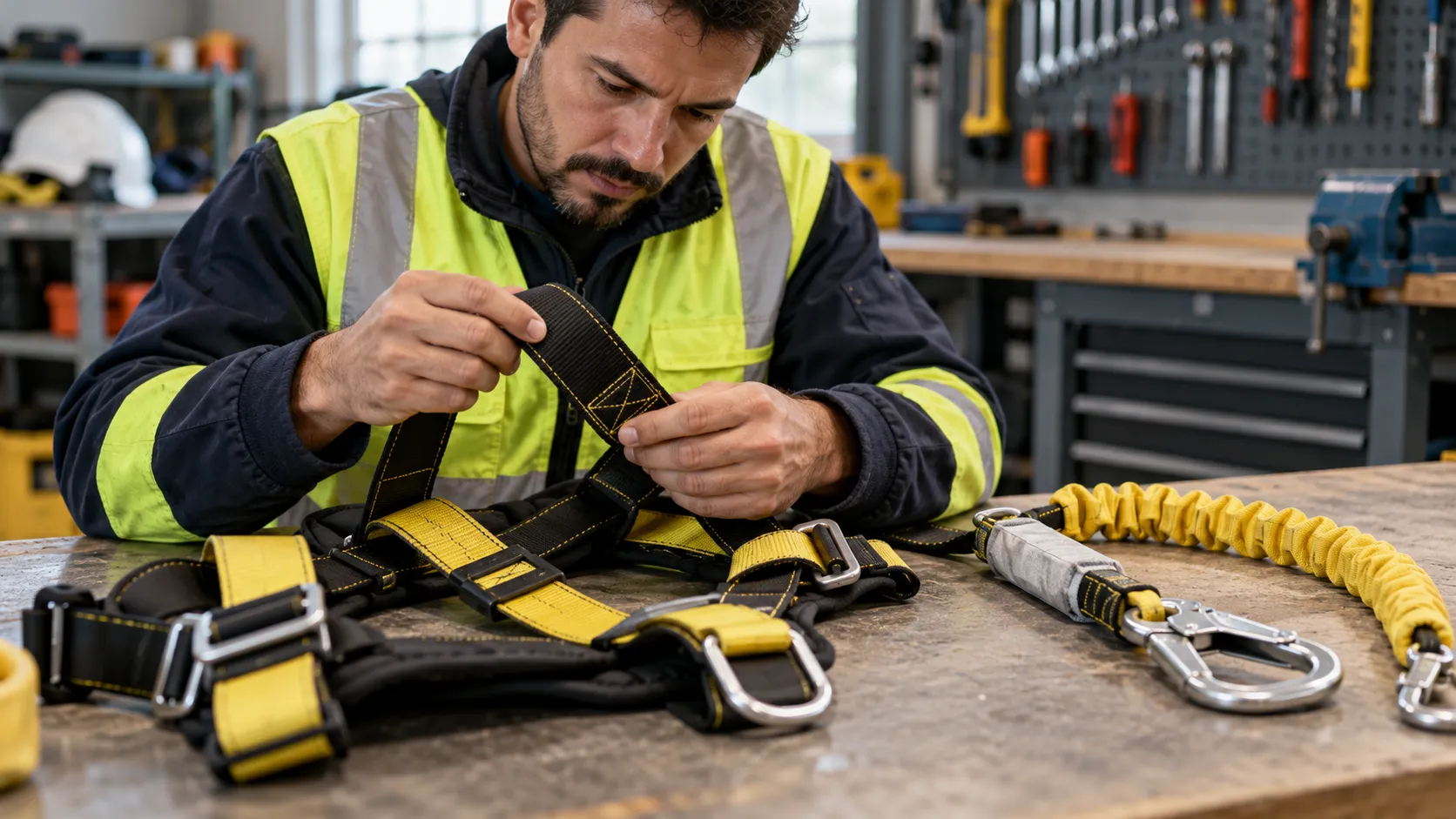
How Long Does Fall Protection Training Last in Alberta?
The Part 9 text we read does not state a renewal period for worker fall protection training [1]. The consolidation on Alberta's OHS legislation site is labelled Alberta Regulation 191/2021 and shows itself as current to March 2023, so anyone relying on this point should confirm against the current official text [1].
Certificate validity is something different. Course providers set an expiry for their own certificates. The Safeworks Academy Fall Protection Alberta page states that its certification is valid for three years [2]. That is the provider's stated validity, not a period written into the Code. An employer may also set a shorter refresher cycle in its own safety program, and a site owner or prime contractor may have requirements of its own. Asking what a particular site requires, before booking a course, avoids paying for training that the site then does not accept. That last point is a practical suggestion, not something the Code says.
Who Is Responsible for What
The Code spreads the duties across three roles [1]:
- Employer: train the worker in the safe use of the system before work in the area (s. 141(1)), develop and maintain the fall protection plan where required (s. 140), and make sure the worker is aware of site-specific fall hazards (s. 141(3)).
- Supervisor: together with the employer, make sure a worker is protected from falling in the situations listed in s. 139(1).
- Worker: use the fall protection system as section 139 requires (s. 139(8)).
Equipment is part of the same picture. Section 150.1 requires fall protection equipment to be inspected by the worker, as the manufacturer requires, before it is used on each work shift [1]. That is why pre-use inspection appears twice in the training content: it is a skill, and it is a daily obligation.
Choosing a Fall Protection Course for Alberta Work
When comparing courses, the section 141(2) list gives a practical checklist:
- Does it cover Alberta's rules? The first item on the section 141(2) list is a review of current Alberta legislation, so an Alberta job calls for a course that addresses Alberta's Code. Safeworks Academy lists a dedicated Alberta course alongside a general one [2][4].
- Does it cover the full topic list? Anchors, connecting hardware, the effect of a fall on the body and emergency response are easy to skip in a short overview.
- What does it say about practice? Ask how the hands-on item is handled and what the employer is expected to do after the online portion.
- What does the certificate show? Check the course length, the pass mark and the validity the provider states. The Safeworks Academy Alberta course lists an 80 percent pass mark with two exam attempts [2].
- Does the site accept it? If you work on someone else's site, confirm whether the site owner or prime contractor requires a particular course.
- Will the records survive an inspection? Keep the certificate, the date, and a note of the practice and site-specific training the employer delivered.
Next Step
If your crew needs the knowledge portion of fall protection training done online, the Fall Protection Alberta course from Safeworks Academy is a four-hour, self-paced course at $89.95 CAD, with a certificate and digital badge issued as soon as the exam is passed [2]. Workers outside Alberta's rules, or those who only need general awareness, can compare the general Fall Protection Online Certification course [4]. For a one-page summary of the Alberta course, including price, length and what the certificate covers, see our fall protection training course page. Other safety courses are listed in the course catalogue. Whichever course you choose, schedule the hands-on practice and the site briefing with your supervisor before anyone works at height.
Frequently Asked Questions
Yes, where a fall protection system must be used. Section 141(1) of the OHS Code requires an employer to make sure a worker is trained in the safe use of the fall protection system before allowing the worker to work in an area where one must be used.
Protection is required where a worker may fall a vertical distance of 3 metres or more. It is also required below 3 metres where there is an unusual possibility of injury, where a fall could be into a hazardous substance or object or through an opening, and at permanent work areas above 1.2 metres.
The Code text we read does not say whether training must be online or in person. It does require practice in inspecting, fitting, adjusting and connecting equipment, and in emergency response, so the employer must make sure that practice happens even when the knowledge portion is online.
The Code text we read sets no renewal period for worker fall protection training. Providers set their own validity, and the Safeworks Academy Fall Protection Alberta course states three years. Your employer, a prime contractor or a site owner may require refreshers sooner, so ask before you rely on a certificate's date alone.
No. The plan is a separate employer document for a specific work site, required where a worker may fall 3 metres or more and is not protected by guardrails. Training teaches workers what a plan is. The employer still has to write it and review it with workers before the work begins.
Sources
- Government of Alberta — "Occupational Health and Safety Code (Alberta Regulation 191/2021), Part 9, Fall Protection (sections 138 to 161)" — search-ohs-laws.alberta.ca
- Safeworks Academy — "Fall Protection - Alberta" course page (course by Danatec Educational Services) — courses.safeworksacademy.ca
- Government of Alberta — "Occupational Health and Safety Code, Part 2, Hazard Assessment, Elimination and Control (section 7)" — search-ohs-laws.alberta.ca
- Safeworks Academy — "Fall Protection Online Certification Training" course page — courses.safeworksacademy.ca
Disclaimer: This article is for general informational purposes and does not constitute legal or regulatory compliance advice. Employers and workers should confirm their specific obligations directly with the responsible regulator (for example Alberta Occupational Health and Safety, the Government of Alberta or Transport Canada, as applicable) or a qualified compliance professional.