
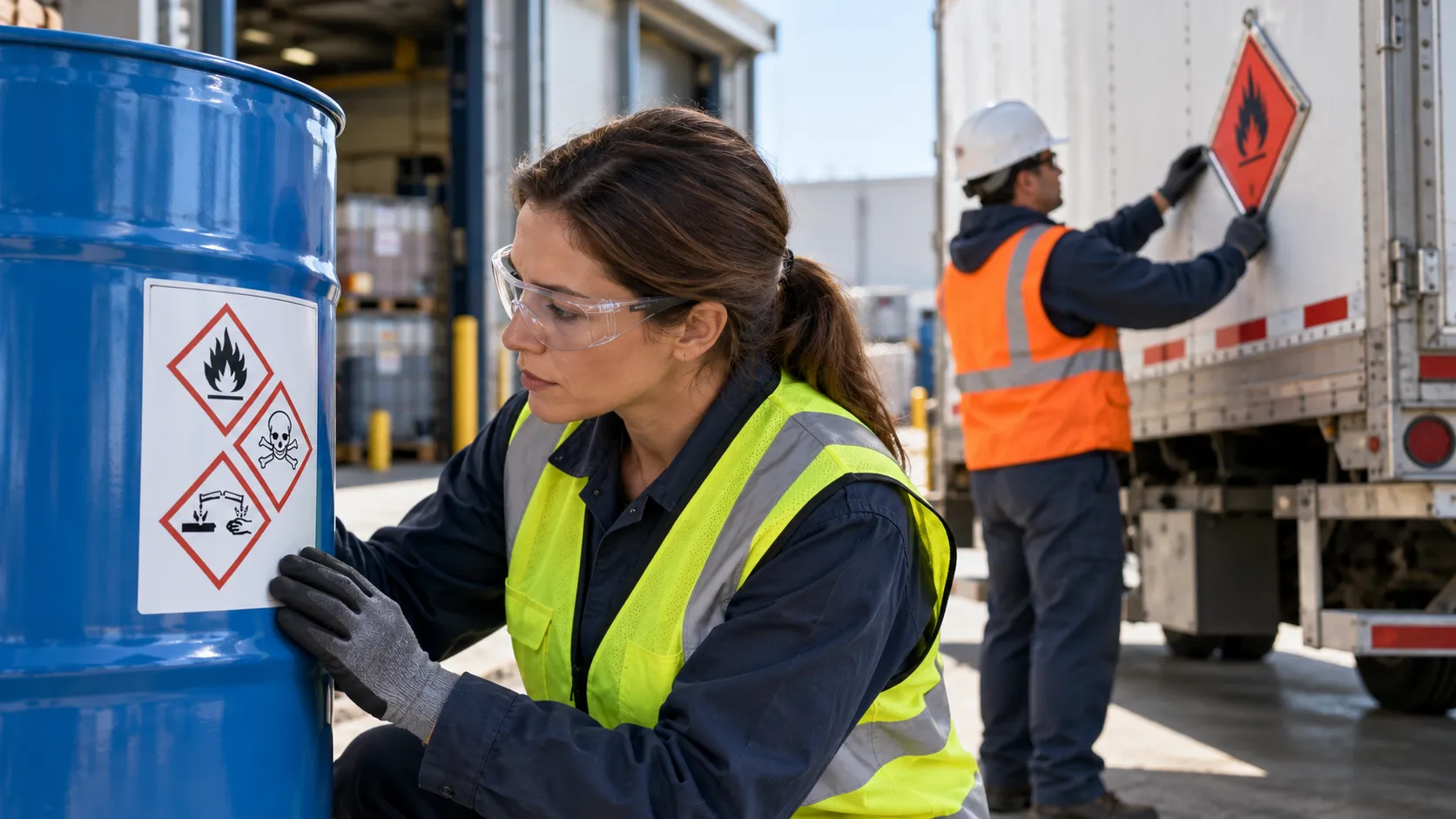
- WHMIS is about hazard communication in the workplace: labels, safety data sheets and worker training. TDG is about the safe movement of dangerous goods by road, rail, air and marine transport.
- Under both systems the employer carries the training duty. Under TDG the employer also issues the training certificate, which the employee and the employer both sign.
- A TDG certificate expires 36 months after issue for road, rail and vessel transport, and 24 months for air. It is not transferable to a new employer.
- The Alberta Code text we read for WHMIS describes required training content. It does not prescribe a certificate format or an expiry period.
- Shipping, receiving and warehouse roles often touch both systems, and Alberta's WHMIS rules step aside where an activity is covered by the dangerous goods transportation rules.
WHMIS vs TDG comes down to two separate safety systems for the same kinds of chemicals. WHMIS governs hazardous products where people work with them, meaning how they are labelled, documented and explained to workers on the job. TDG, the Transportation of Dangerous Goods Act and Regulations, governs those goods when they are being moved, which includes packing, loading, unloading and transporting them. A worker who only stores and uses chemicals on site usually needs WHMIS training. A worker who prepares, handles or moves dangerous goods for transport needs TDG training, and many warehouse and shipping roles need both.
WHMIS vs TDG at a Glance
| Question | WHMIS | TDG |
|---|---|---|
| What it covers | Hazardous products used, stored and handled at a workplace | Dangerous goods being handled for transport, offered for transport or transported |
| Main law | Federal Hazardous Products Act and regulations, plus each province's own workplace health and safety law (in Alberta, Part 29 of the OHS Code) | Federal Transportation of Dangerous Goods Act and Regulations (Part 6 covers training) |
| Who must train workers | The employer | The employer |
| What training covers | Labels, safety data sheets, safe storage, use and handling, and emergency procedures for the products at the site | Classification, shipping names, shipping documents, dangerous goods marks, containment, emergency measures and related topics, as they relate to the person's duties |
| Certificate | No certificate format or expiry period in the Alberta Code text we read | Issued and signed by the employer, with required contents and an expiry date |
| Validity | Set by employer practice and provider, not by the Alberta Code text we read | 24 months for air transport, 36 months for road, rail and vessel transport |
| Transfers to a new employer? | Alberta requires each employer to make sure its own workers are trained; confirm with a new employer what it accepts | No. Certificates are issued by the current employer and are not transferable |
The sections below cover each column in turn and cite the sources behind them.
What WHMIS Covers
The Canadian Centre for Occupational Health and Safety describes WHMIS as a national system for providing information on the safe use of hazardous products in the workplace [1]. The hazard identification and information requirements sit in the federal Hazardous Products Act and its regulations, and each province and territory has its own Act and regulations that apply WHMIS to employers and workers in its jurisdiction [1]. The same CCOHS page says employers must provide education and training programs for workers exposed to hazardous products, make sure products are labelled, and make sure a safety data sheet is present and readily available to workers [1].
In Alberta, section 397 of the OHS Code requires an employer to make sure a worker who works with or near a hazardous product is trained in [2]:
- the content required on a supplier label and a workplace label, and what the information means;
- the content required on a safety data sheet, and what it means;
- procedures for safely storing, using and handling the product;
- procedures to follow if there are fugitive emissions; and
- procedures to follow in an emergency involving the product.
Alberta Occupational Health and Safety adds that the training must include site-specific information about the products and the health and safety procedures used at the work site. Its employer bulletin also states that employers are not required to use a commercial training provider, and that generic commercial courses alone will not necessarily meet the requirement [3]. If you want the full explanation of what an online WHMIS course covers and what it leaves to the employer, see our guide to WHMIS online certification in Alberta.

What TDG Covers
TDG is about the movement of dangerous goods. The Transportation of Dangerous Goods Regulations require a person who handles, offers for transport or transports dangerous goods to be adequately trained and hold a training certificate, or to do that work in the presence of and under the direct supervision of someone who is trained and certified [4]. An employer must not direct or allow an employee to do those things without that training [4].
"Handling" has a specific meaning in the TDG Act. As quoted by the Canadian Centre for Occupational Health and Safety, it means loading, unloading, packing or unpacking dangerous goods in a means of containment for the purposes of, in the course of or following transportation, and it includes storing them in the course of transportation [5]. So a person who packs a drum for shipment, or unloads a delivery of dangerous goods, is handling dangerous goods for TDG purposes even if the person never drives a vehicle.
A person is "adequately trained" under the Regulations if they have sound knowledge of the listed topics that relate directly to their duties and to the dangerous goods they are expected to handle, offer for transport or transport. The topics include classification, shipping names, shipping documents, dangerous goods marks, containment standards, the emergency response assistance plan requirements, reporting, safe handling and emergency measures [4]. Our guide to TDG online certification in Alberta walks through how that duties-based test applies to different roles.
Who Needs Which: Typical Roles
The right answer for a given worker depends on the worker's actual duties, and the employer decides what training is adequate. The scenarios below show how the two systems usually line up. They are illustrations, not a ruling on any particular job.
- Stores and uses chemicals on site and never ships anything. WHMIS applies because the worker works with or near hazardous products [2]. TDG applies only if the worker's duties include handling goods in the course of transportation [5].
- Drives a vehicle carrying dangerous goods. TDG applies because the worker transports dangerous goods [4]. If the same worker also works with or near hazardous products at a customer's or the employer's site, WHMIS may apply there as well.
- Packs, labels or documents dangerous goods for shipment. TDG applies, since packing and offering for transport are covered activities [4][5]. The same person may also work with those products in the building, in which case WHMIS applies to that part of the job.
- Receives and unloads deliveries. Unloading in the course of transportation falls within the TDG meaning of handling [5]. Once the product is in storage and in use, the workplace rules take over.
The common thread is that duties decide the training. The product is the same drum, but the activity changes which system is in play.
Where the Two Systems Overlap
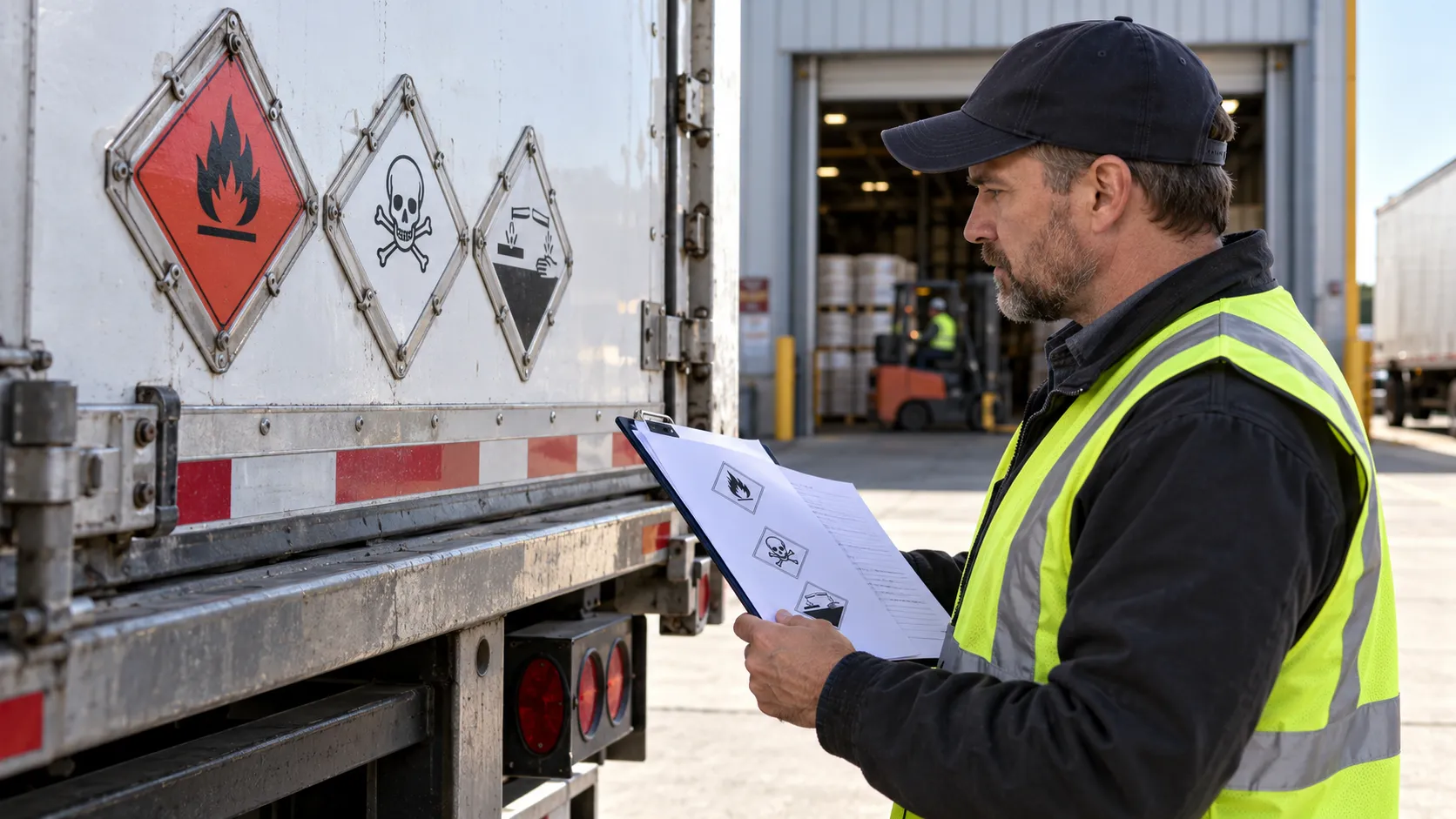
Alberta's WHMIS rules acknowledge the overlap directly. Section 395(4) of the OHS Code says that, except for section 407, Part 29 does not apply if the hazardous product is a dangerous good under the Dangerous Goods Transportation and Handling Act, "to the extent that its handling, offering for transport or transport is subject to that Act" [2]. In plain terms, when an activity is covered by the dangerous goods transportation rules, the WHMIS part of the Code steps aside for that activity.
That does not make the choice automatic. A drum of solvent that arrives by truck is a TDG matter while it is in transport, and a WHMIS matter once it is stored and used at the workplace. The point where one stops and the other starts can be a judgment call. The Alberta bulletin on WHMIS training lists the Occupational Health and Safety Contact Centre at 1-866-415-8690 for questions about Alberta requirements [3], and Transport Canada publishes the TDG training guidance [6].
One small connection between the systems: a WHMIS safety data sheet has 16 sections, and one of them is transport information [1]. That is where an employer can start when working out whether a product also counts as a dangerous good in transport, although the TDG Regulations, not the data sheet, decide that.

Certificates: What You Actually Get
For TDG, the certificate is a regulated document. The Regulations require the employer, once it has reasonable grounds to believe the employee is adequately trained, to issue a training certificate that includes [4]:
- the name and address of the employer's place of business;
- the employee's name;
- the date the certificate expires, preceded by the words "Expires on"; and
- the aspects of handling, offering for transport or transporting that the employee is trained for.
The certificate must be signed by the employee and by the employer or another employee acting on the employer's behalf. A certificate expires 24 months after issue for air transport and 36 months after issue for road, rail or vessel transport [4]. Transport Canada's training bulletin states that training certificates are not transferable [6]. That is why the Safeworks Academy TDG course page reminds learners to have their certificate signed by their employer [7].
For WHMIS, the Alberta Code text we read lists training content but contains no certificate format, expiry date or renewal period [2]. Course providers issue their own certificates. The Safeworks Academy WHMIS page says that legislation does not mandate an expiry date for WHMIS training and that its provider's certificate is valid for three years [8]. That is the provider's choice. What an Alberta employer must keep up is workers who are trained in the Part 29 topics and aware of the site's products, whether or not a certificate is involved.
Do You Need Both?
Use these questions as a starting point, then confirm with your employer or supervisor:
- Do your duties include packing, loading, unloading, documenting or driving dangerous goods? If yes, TDG training and a certificate issued by your employer are required.
- Do you work with or near hazardous products at a workplace? If yes, WHMIS training under your province's rules is required.
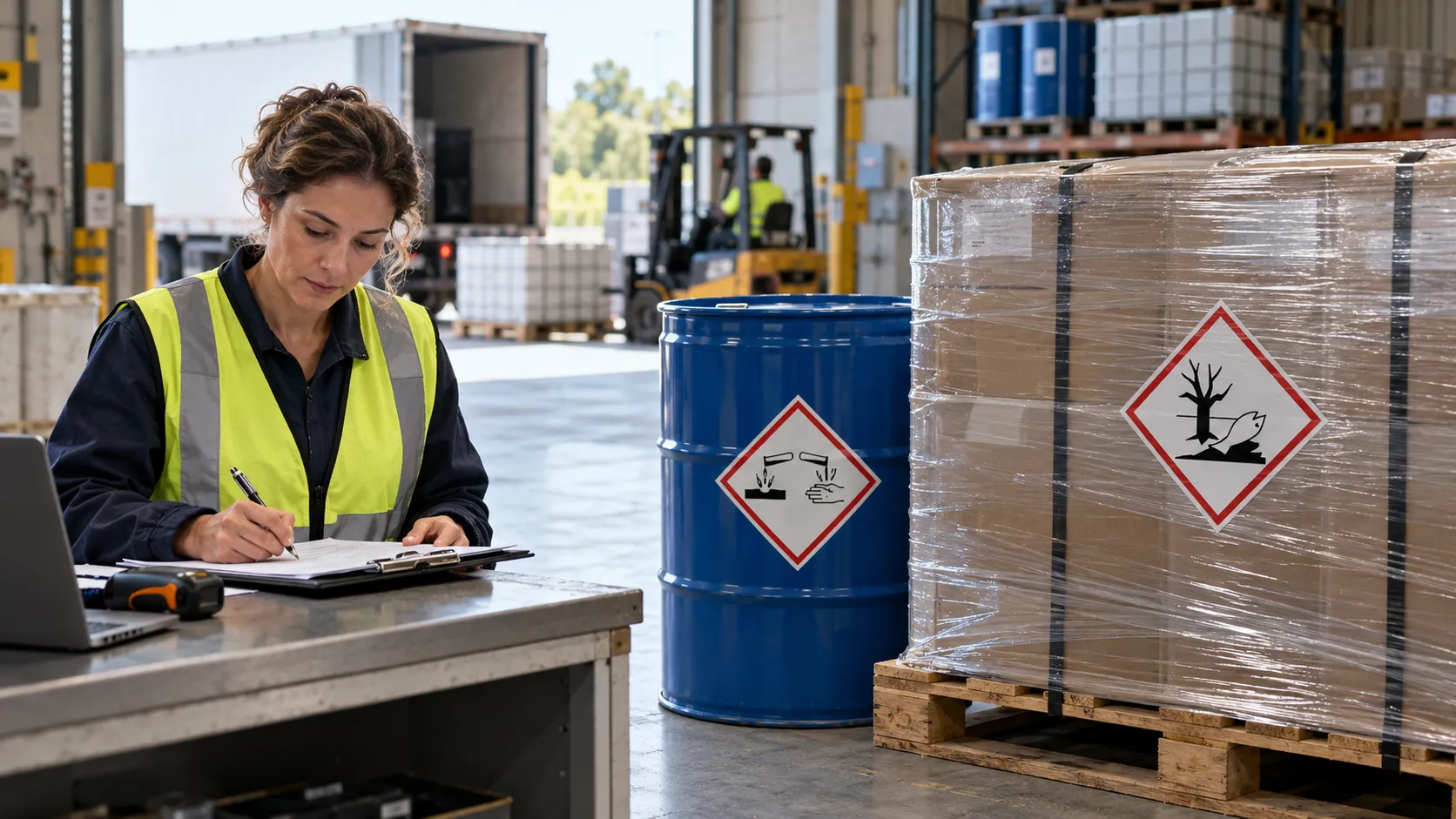
- Do you do both? Many shipping, warehouse and driver roles do, and then both sets of training apply.
- Are you unsure where a task falls? Ask your employer to assess it, and use the Alberta OHS Contact Centre or Transport Canada for questions that the employer cannot answer.
Next Step
If you need the two courses side by side, the WHMIS (GHS) Online Certification Training course is 1 hour 30 minutes at $29.95 CAD, and the TDG Online Training course is 3 hours at $34.95 CAD, with a course certificate issued on completion of each [7][8]. For TDG, remember that the certificate still has to be issued and signed by your employer, and for WHMIS, your employer still has to cover the products and procedures at your own site.
Frequently Asked Questions
No. WHMIS is the workplace hazard communication system for hazardous products, built around labels, safety data sheets and worker education. TDG is the federal system for the safe transportation of dangerous goods. They are separate laws with separate training requirements.
It depends on your duties. A worker who only stores and uses chemicals on site generally needs WHMIS. A worker who handles, offers for transport or transports dangerous goods needs TDG. Many shipping, receiving and driving roles involve both activities, so both apply.
No. The two cover different activities and different laws. A TDG certificate shows training in handling and transporting dangerous goods. It does not by itself show training in workplace labels, safety data sheets and site procedures under Alberta's WHMIS rules.
A TDG certificate expires 24 months after issue for air transport and 36 months after issue for road, rail and vessel transport. The Alberta OHS Code text we read sets no expiry for WHMIS training, although course providers set their own certificate validity.
For TDG, the employer issues and signs the training certificate, and a self-employed person may issue their own. For WHMIS, Alberta requires the employer to make sure workers are trained. Course providers issue their own completion certificates, which the Code text we read does not prescribe.
Sources
- Canadian Centre for Occupational Health and Safety (CCOHS) — "WHMIS Basics" (Young Workers Zone) — ccohs.gc.ca
- Government of Alberta — "Occupational Health and Safety Code (Alberta Regulation 191/2021), Part 29, Workplace Hazardous Materials Information System (WHMIS)" — search-ohs-laws.alberta.ca
- Government of Alberta, Occupational Health and Safety — "High-pressure WHMIS training sales tactics" (AL035, updated July 2022) — open.alberta.ca
- Justice Laws Website — "Transportation of Dangerous Goods Regulations (SOR/2001-286), Part 6, Training" — laws-lois.justice.gc.ca
- Canadian Centre for Occupational Health and Safety (CCOHS) — "Transportation of Dangerous Goods (TDG) - Training (Road)" (last revised 2024-01-09) — ccohs.ca
- Government of Canada, Transport Canada — "TDG Bulletin: TDG Training" — tc.canada.ca
- Safeworks Academy — "TDG Online Training" course page (course by Danatec Educational Services) — courses.safeworksacademy.ca
- Safeworks Academy — "WHMIS (GHS) Online Certification Training" course page (course by Danatec Educational Services) — courses.safeworksacademy.ca
Disclaimer: This article is for general informational purposes and does not constitute legal or regulatory compliance advice. Employers and workers should confirm their specific obligations directly with the responsible regulator (for example Alberta Occupational Health and Safety, the Government of Alberta or Transport Canada, as applicable) or a qualified compliance professional.